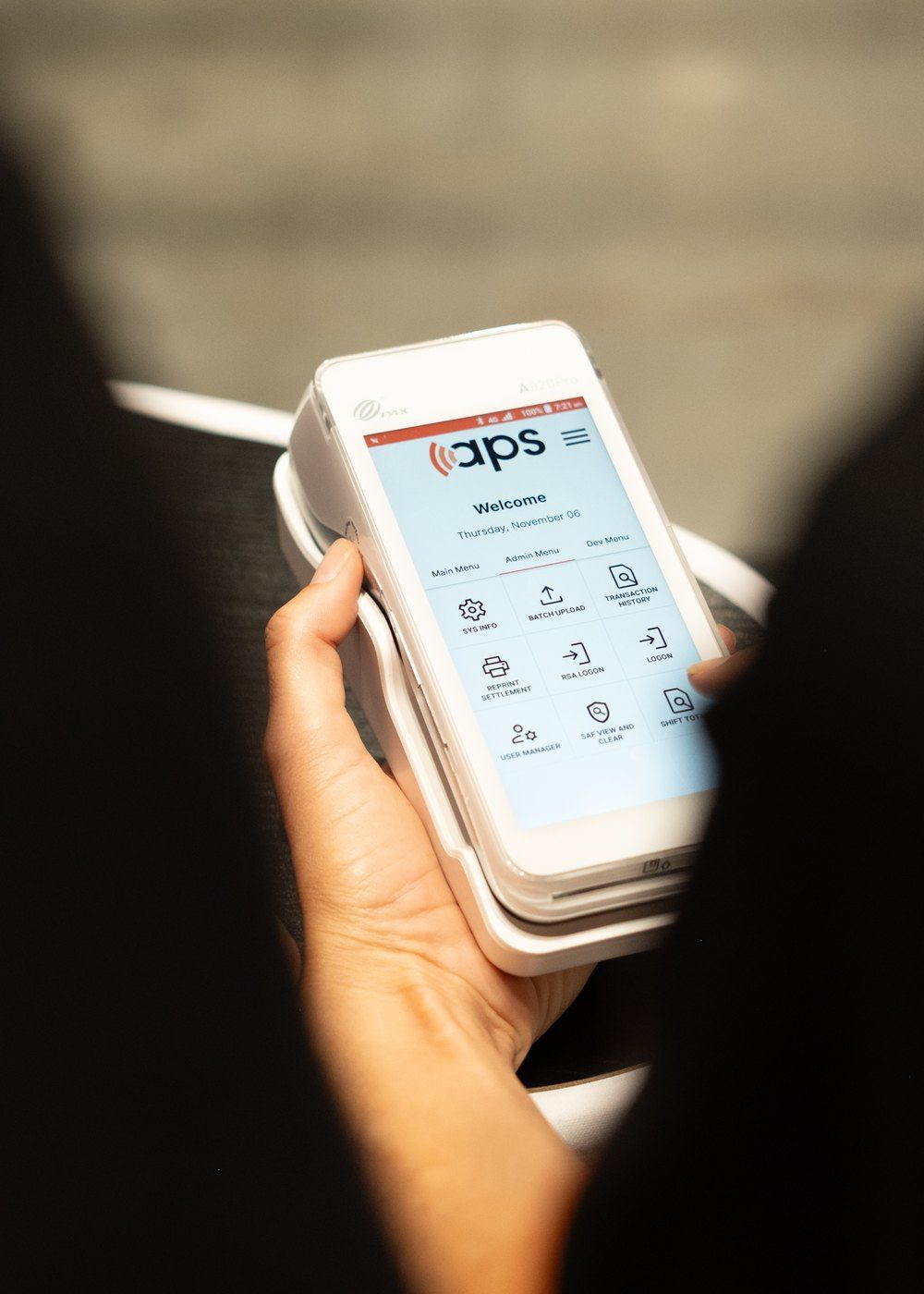
Australia's top EFTPOS terminal providers in 2026 include CommBank, NAB, Westpac, ANZ Worldline, Square, Zeller, Tyro, PayNuts, and APS. Transaction rates range from 0.7% to 1.6%, with terminals available to rent from around $25/month or buy outright from $99. The best provider depends on your business type, transaction volume, POS system, and need for local support.
Choosing the wrong EFTPOS terminal provider costs Australian businesses real money — not just in fees, but in lost time, reconciliation headaches, and poor customer experience at the point of sale. This guide cuts through the noise so you can make the right call for your business in 2026.
What to Look for in an EFTPOS Terminal Provider
The six things that actually matter when comparing EFTPOS terminal providers in Australia are: hardware quality, transaction fees, software tools, contract terms, sign-up transparency, and customer support.
Before you compare rates or scroll through hardware specs, you need a clear framework. Here's what to evaluate:
- Hardware quality — Does the terminal hold a charge through a full shift? Is it built for a counter, a table, or a job site? Hardware that fails at peak hour is not just inconvenient — it costs you sales.
- Transaction fees — The headline rate matters, but so does whether it applies to all card types equally. Some providers charge different rates for Visa, Mastercard, and Amex. Know exactly what you're paying per transaction.
- Value-added tools — Reporting dashboards, end-of-day reconciliation exports, tipping prompts, and split billing functionality are increasingly standard. If your terminal can't do these, you're doing extra admin manually.
- Contract terms — Month-to-month flexibility versus fixed 12 or 24-month agreements. This is one of the most overlooked decision points and one of the biggest sources of merchant complaints.
- Sign-up transparency — Are fees clearly listed before you commit? Can you get a straight answer about settlement timing, early exit fees, and minimum monthly charges?
- Service quality — When something goes wrong at 7pm on a Friday, who answers the phone? Local Australian support versus offshore call centres makes a material difference.
Use these six criteria as your filter — not just price. A provider that scores well across all six will cost you less over 12 months than a cheap-looking deal with hidden friction.
How EFTPOS Fees Actually Work — and Why 1% Makes a Bigger Difference Than You Think
A 1% difference in transaction rate equals roughly $30 per month in savings for a business processing $3,000 per month — which is more than many providers charge for terminal rental.
EFTPOS fees in Australia generally fall into three categories:
- Transaction rate — A percentage of every card payment processed (typically 0.7%–1.6%)
- Monthly terminal rental — A flat fee to hire the hardware (typically $20–$45/month)
- Settlement timing — When the money actually lands in your bank account (same day, next business day, or 2–3 days)
Here's why the maths matters. Run $10,000 per month through a terminal at 1.5% and you pay $150 in transaction fees. Drop to 0.5% and you pay $50. That $100 difference covers your terminal rental — with change left over.
Settlement timing is underappreciated. A café processing $800 in card sales on a Saturday wants that money in their account Monday morning — not Wednesday. Some Big 4 bank terminals settle next business day as standard. Others settle same day if you meet a cut-off time.
Interchange-plus pricing versus flat-rate pricing is worth understanding. Flat-rate providers (like Square) charge the same percentage regardless of card type. Interchange-plus models pass through the actual card network cost plus a fixed margin — this can work out cheaper for businesses processing high volumes of debit cards, which carry lower interchange rates.
The Reserve Bank of Australia (RBA) regulates surcharging practices for card payments, which means if you plan to pass card fees onto customers, your terminal must support compliant surcharging — not all do.
Rental vs. Purchase: Which EFTPOS Terminal Model Suits Your Business?
Renting suits businesses that want low upfront cost and regular hardware upgrades. Buying outright suits businesses with stable setups that want to eliminate ongoing fees.
Here's how the two models compare side by side:
| Factor | Rental (~$25–$45/month) | Purchase ($99–$329+) |
|---|---|---|
| Upfront cost | Low or none | Full hardware cost upfront |
| Ownership | Provider retains hardware | You own the terminal |
| Hardware replacement | Often included | Your responsibility |
| Flexibility | Easier to swap or return | Locked to that hardware |
| Total cost (12 months) | $300–$540 in rental | $99–$329 one-time |
| Total cost (24 months) | $600–$1,080 in rental | Same $99–$329 |
| Best for | New businesses, low capital | Established businesses, high volume |
The break-even point on a purchased terminal is typically around 8–12 months compared to renting. After that, ownership is cheaper — assuming the hardware keeps working.
A practical consideration for tradies and mobile businesses: portable terminals that run on 4G rather than WiFi are worth buying outright if you're using them daily. Rental agreements sometimes restrict which network or SIM you can use, limiting your options in the field.
One watch-out: some "purchase" models from independent providers still require a monthly software or service fee to process payments. Check whether the hardware cost is truly all-in or whether there's a platform fee layered underneath.
The Big 4 Banks vs. Independent EFTPOS Providers
The Big 4 banks offer familiarity and integrated banking, but independent providers typically offer lower rates, more flexible contracts, and better tech integration.
Here's how the main players compare on the metrics that matter most:
| Provider | Typical Transaction Rate | Contract Type | Key Strength | Watch Out For |
|---|---|---|---|---|
| CommBank | ~1.1% | Fixed term | Existing banking integration | Early exit fees |
| NAB | ~1.15% | Fixed term | Business banking bundle | Rate negotiation complexity |
| Westpac | ~1.2% | Fixed term | Branch support network | Higher rates vs independents |
| ANZ Worldline | Varies | Fixed term | Large-business scale | Less suited to small business |
| Square | 1.6% flat | No lock-in | Zero monthly fees | Rate is higher for volume |
| Zeller | 1.4% flat | No lock-in | Built-in business account | Newer platform |
| Tyro | Interchange-plus | Flexible | Strong POS integrations | Approval process |
| PayNuts | 0% (surcharge model) | Flexible | Business pays nothing | Customer-facing surcharge |
| APS | Competitive flat rate | Flexible | 600+ POS integrations, local support | Talk to team for custom rate |
The Big 4 banks make sense if you're processing very high volumes and can negotiate a custom rate below 1%. For most small-to-medium Australian businesses, independent providers offer better value and fewer contractual headaches.
APS stands out for businesses that need a full-service, locally supported solution. With integration across 600+ leading POS systems and direct support from an Australian team, it bridges the gap between enterprise-grade capability and small business flexibility — something the banks rarely offer at comparable pricing.
A busy Brisbane café recently switched from their CommBank terminal to a provider with deeper POS integration. The result: same-day settlement and seamless table-side payment flow transformed their end-of-shift reconciliation from a 30-minute manual process to under five minutes. The switch also dropped their effective rate by 0.3%.
Key Features to Demand from Any EFTPOS Terminal in 2026
In 2026, a baseline EFTPOS terminal must support contactless payments, 4G connectivity, surcharging capability, and fast settlement — anything less is behind the market.
Not all EFTPOS terminals handle these equally. Here's what to insist on:
Battery Life and Portability
A terminal used at a food market, by a tradie, or on a café floor needs to last a full shift — typically 8–10 hours of active use. Some cheaper terminals drop to 4–5 hours under load.
Consider a Sydney-based electrician running jobs across the city. No WiFi on-site is the norm. A terminal dependent on a fixed broadband connection is useless. What they need is a 4G-connected, long-battery portable terminal — something that can process a $1,200 invoice in a customer's driveway without a network cable in sight. Battery life and 4G capability are non-negotiables for any mobile business.
Surcharging Capability
The ACCC's surcharging rules require that surcharges reflect the actual cost of card acceptance and cannot exceed that cost. Your terminal needs to calculate and apply this accurately. Not all terminals do — some apply a blanket rate that may put you at risk of overcharging, which the ACCC actively monitors.
POS Integration
If your EFTPOS terminal doesn't talk to your POS system, your staff are double-entering every transaction. This creates errors, slows service, and creates reconciliation nightmares. APS integrates with 600+ POS systems — covering hospitality, retail, health, and service businesses — which eliminates this problem entirely.
Settlement Speed
Same-day or next-business-day settlement is now the standard expectation. If a provider can't commit to this clearly in writing, that's a red flag.
Contactless and Digital Wallet Acceptance
Apple Pay, Google Pay, Samsung Pay, and tap-to-pay are now the dominant payment method in Australia, according to Australian Payments Network (AusPayNet). Any terminal that doesn't accept these is turning away customers.
Refund Processing
Easy, manager-free refunds from the terminal itself — not requiring a call to your provider — matter more than most businesses realise until they're standing at the counter with an unhappy customer.
Which EFTPOS Provider Suits Which Type of Business?
Different business types have genuinely different payment needs — the right provider for a gym is not the right one for a café or a tradie.
Here's a practical breakdown:
| Business Type | Key Need | Recommended Direction |
|---|---|---|
| Café | Fast throughput, table-side payments, POS integration, same-day settlement | APS, Tyro |
| Restaurant | Bill splitting, tipping, long battery, POS integration | APS, Tyro |
| Retail | Multiple terminals, inventory POS link, fast settlement | APS, Zeller |
| Tradie | Portable, 4G-connected, invoice on the spot | APS, Square |
| Market stall | No lock-in, low monthly cost, tap-to-pay | Square, APS |
| Gym | Recurring billing, membership POS, health platform integration | APS |
| Health clinic | HIPAA-adjacent privacy, integrated billing, refund handling | APS |
| Hospitality | Speed, volume, POS ecosystem, local support | APS, Tyro |
APS works across all of these verticals — which matters if you operate more than one type of business or run a business that spans categories (like a fitness studio with a café bar). You don't have to manage multiple provider relationships, rate structures, or support contacts.
For businesses that just want the absolute lowest upfront cost and minimal commitment, Square or Zeller are worth considering. But if you need local Australian support, deeper POS integration, and pricing that scales with your volume rather than against it, APS is the more complete solution.
Contract Lock-In and Cancellation Fees: What to Watch Out For
Fixed-term EFTPOS contracts with exit fees are still common among the Big 4 banks and some independents — read the fine print before you sign.
Here's what merchant reviews consistently flag as the biggest pain points:
Fixed-Term vs. Month-to-Month
A 24-month contract might come with a lower advertised rate — but if your business changes, you're stuck. Exit fees commonly range from $200 to $400+ depending on how many months remain on your contract.
Month-to-month agreements give you the freedom to switch without penalty. This is increasingly the preferred model among independent providers.
Minimum Monthly Charges
Some providers charge a minimum monthly processing fee — meaning even if you have a slow month, you still pay as if you processed a certain volume. This catches seasonal businesses off guard: think a beach-side café in winter or a Christmas-only retail pop-up.
Settlement Timing Clauses
Check the fine print on when settlement actually happens. Some contracts include language around "business days" that effectively delays Friday and weekend settlements until Tuesday. If cash flow is tight, this matters significantly.
Cancellation Notice Periods
Some contracts require 30, 60, or even 90 days' written notice to cancel. If you miss the notice window, you can roll into another term automatically.
What to do: Ask every provider directly — in writing — for:
- Exit fee structure and amount
- Minimum monthly charge (if any)
- Settlement timing, including weekends
- Cancellation notice period
A provider that can't answer these questions simply and clearly is telling you something important.
Why Businesses Across Australia Choose APS for EFTPOS
APS combines transparent pricing, flexible contracts, 600+ POS integrations, and local Australian support — making it the standout choice for businesses that want a full-service EFTPOS solution without the complexity.
For Australian businesses comparing eftpos terminal providers, APS solves the problems that frustrate merchants most:
- No lock-in flexibility — you're not trapped in a contract that stops serving you
- Transparent fees — no hidden minimum monthly charges or surprise settlement delays
- 600+ POS integrations — from hospitality platforms to health clinic software, APS connects to the systems your business already runs
- Local Australian support — real people, based in Australia, available when you need them
- Broad vertical coverage — whether you run a café in Melbourne, a tradie business in Sydney, a retail shop in Brisbane, or a health clinic in Perth, APS has the terminal and the integration to match
The question for most Australian business owners isn't whether they need EFTPOS — it's whether their current provider is actually the right fit. If you're paying over 1.2% in transaction fees, locked into a contract you can't escape, or running a POS system that doesn't talk to your terminal, there's a better way.
Visit aps.business today to compare plans, check POS compatibility, and talk to an Australian-based payments specialist who can find the right terminal and rate for your business.


